The words “adrenaline” and “cortisol” get thrown around a lot, often with a scary edge (“cortisol is ruining your life”). This lesson gives you an accurate, calm picture of what these hormones do, why the timing matters, and how to work with them.
Adrenaline: the fast responder
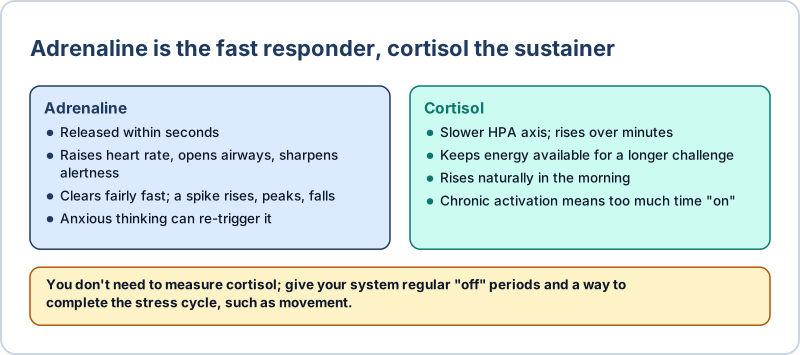
Adrenaline (also called epinephrine) is released from the adrenal glands within seconds of your brain detecting a threat. It:
- Raises heart rate and blood pressure
- Opens up the airways
- Releases stored glucose for quick energy
- Sharpens alertness
Adrenaline acts fast and also clears fairly fast. The initial surge from a single scare usually fades within minutes once the trigger is gone and you aren’t adding fuel. That’s worth remembering. A spike of anxiety has a natural arc. It rises, peaks, and falls. The trouble is that anxious thinking often re-triggers the surge (“What if it happens again?”), so it feels like the surge never ends.
Cortisol: the sustainer
Cortisol is released through a slower chain called the HPA axis (hypothalamus, pituitary, adrenal). It takes minutes, rather than seconds, to rise. Its job is to keep you going during a longer challenge by keeping energy available, adjusting immune activity, and supporting alertness.
Cortisol isn’t a villain. You need it. It naturally rises in the morning to help you wake up, which is called the cortisol awakening response. This is part of why some people feel more anxious soon after waking, especially if they grab their phone right away.
Problems come with chronic activation. When the alarm is pressed day after day through ongoing stress, poor sleep, and constant rumination, the system spends more time “on” than it was built for. Many people notice this as fatigue, irritability, poorer sleep, trouble concentrating, and a lower threshold for anxiety. You don’t need to measure your cortisol. You need to give your system regular, reliable “off” periods.
The stress cycle: finishing what the alarm started
Your alarm system was built for threats you could run from or fight, and physical action helped burn off the surge. Modern stressors, like an email, a deadline, or a tense conversation, activate the same system but give you nothing physical to do. You sit still, flooded, and the energy has nowhere to go.
A practical idea: give your body a way to complete the response. Options:
- Movement. A brisk ten-minute walk, stairs, jumping jacks, or a short workout.
- Slow exhale breathing. You’ll learn this in Lesson 2.3.
- A physical release. Shaking out your hands and arms, stretching, or tensing and releasing muscles (Lesson 4.3).
- Social connection. A genuine, warm exchange with someone you trust.
- Crying or laughing. Both are natural physical releases.
These aren’t luxuries. They’re how the alarm cycle is designed to close.
Timing matters
Because adrenaline is fast and cortisol is slower, it helps to think in timeframes:
| Time since trigger | What’s happening | Most useful tools |
|---|---|---|
| 0–2 minutes | Adrenaline surge; peak body sensations | Long-exhale breathing, grounding, naming |
| 2–30 minutes | Surge fading if not re-fueled; cortisol rising | Movement, the Four-Question Check, returning to the task |
| Hours to days | Sustained stress load | Sleep, routines, worry scheduling, values-based action |
This is why cognitive tools like thought-checking work better after the first physical wave passes. In the first two minutes, work with your body. After that, your thinking brain is more available.
What adds fuel, and what doesn’t
Things that tend to keep the alarm going:
- Replaying and “what-if-ing”
- Checking, googling, and reassurance-seeking
- Lots of caffeine or other stimulants
- Alcohol, especially as it wears off
- Scrolling alarming news
- Staying completely still and bracing
Things that tend to help it come down:
- Slow exhales
- Movement
- Naming the feeling, then turning back to the task
- Warm social contact
- Sleep and regular meals
Imagine this
Jordan, a trial attorney, feels a surge as the judge enters. For the first minute she lets the sensations be there and does two long exhales. She tells herself, “Adrenaline. It’ll peak and pass.” By the time she stands to speak, the surge has partly settled and she’s thinking clearly. That evening, instead of replaying the hearing on the couch, she walks for twenty minutes. That’s her way of finishing the cycle.
Action Step
Complete Worksheet 2.2: My Fuel and Brake List. List the things in your life that add fuel to the alarm and the things that engage the brake. Then pick one way to finish the stress cycle that you’ll use after your most stressful recurring event each week. Schedule it.