A chaotic morning is not just unpleasant, it is expensive. Every scramble to find your keys, decide what to wear, or answer an urgent message before you have had coffee spends mental fuel you will need later for real decisions at work or with the people you care about. This lesson breaks down what a disorganized start actually costs you cognitively and why designing your mornings on purpose changes the quality of the rest of your day, not just the first hour.
Decision Fatigue Before 9 AM
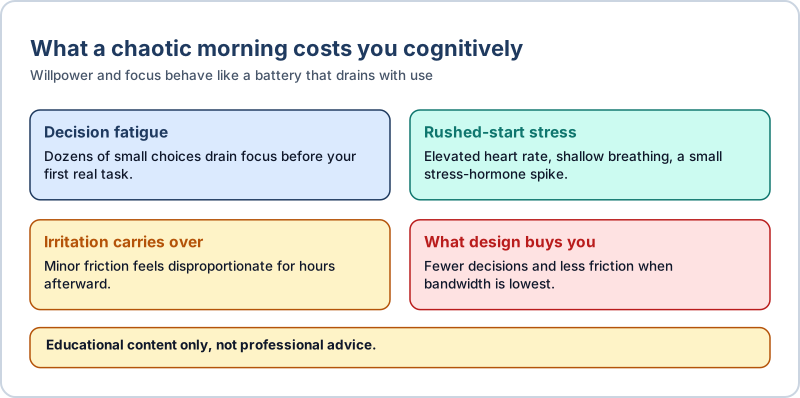
Willpower and focus behave like a battery that drains with use, not a switch you can flip back on whenever you want. When your morning forces dozens of small decisions, what to eat, what route to take, whether to answer that email right now, you arrive at your first real task of the day already partially depleted. That is a large part of why afternoons often feel harder than they should: you spent your best decision-making capacity before 8 AM on things that did not need to be decided in the moment at all.
The Physiology of a Rushed Start
Rushing triggers a mild stress response: elevated heart rate, shallow breathing, a small spike in stress hormones that your body reads as low-grade danger. Repeated every single day, this primes you to react defensively to minor friction, a slow barista, a delayed train, a slightly rude email, turning small inconveniences into disproportionate irritations that follow you into meetings and conversations for hours afterward, long after the original rush is over.
What a Designed Morning Actually Buys You
A deliberately built routine is not about waking at 5 AM or doing an hour of exercise before sunrise. It is about removing decisions and friction from the two hours of the day when you have the least bandwidth to handle them, so the mental energy you would have spent scrambling is available instead for the work, conversations, and choices that genuinely matter to you later.
Action Step
Tonight, identify one decision that eats into your morning energy, most people find it is what to wear or what to eat, and eliminate it entirely by making the call the night before. Lay out clothes or plan breakfast before bed for the next five mornings and pay attention to how much lighter the first hour of your day feels once that single decision is gone.
Educational content only, not professional advice. No outcomes, promotions, or results are guaranteed.